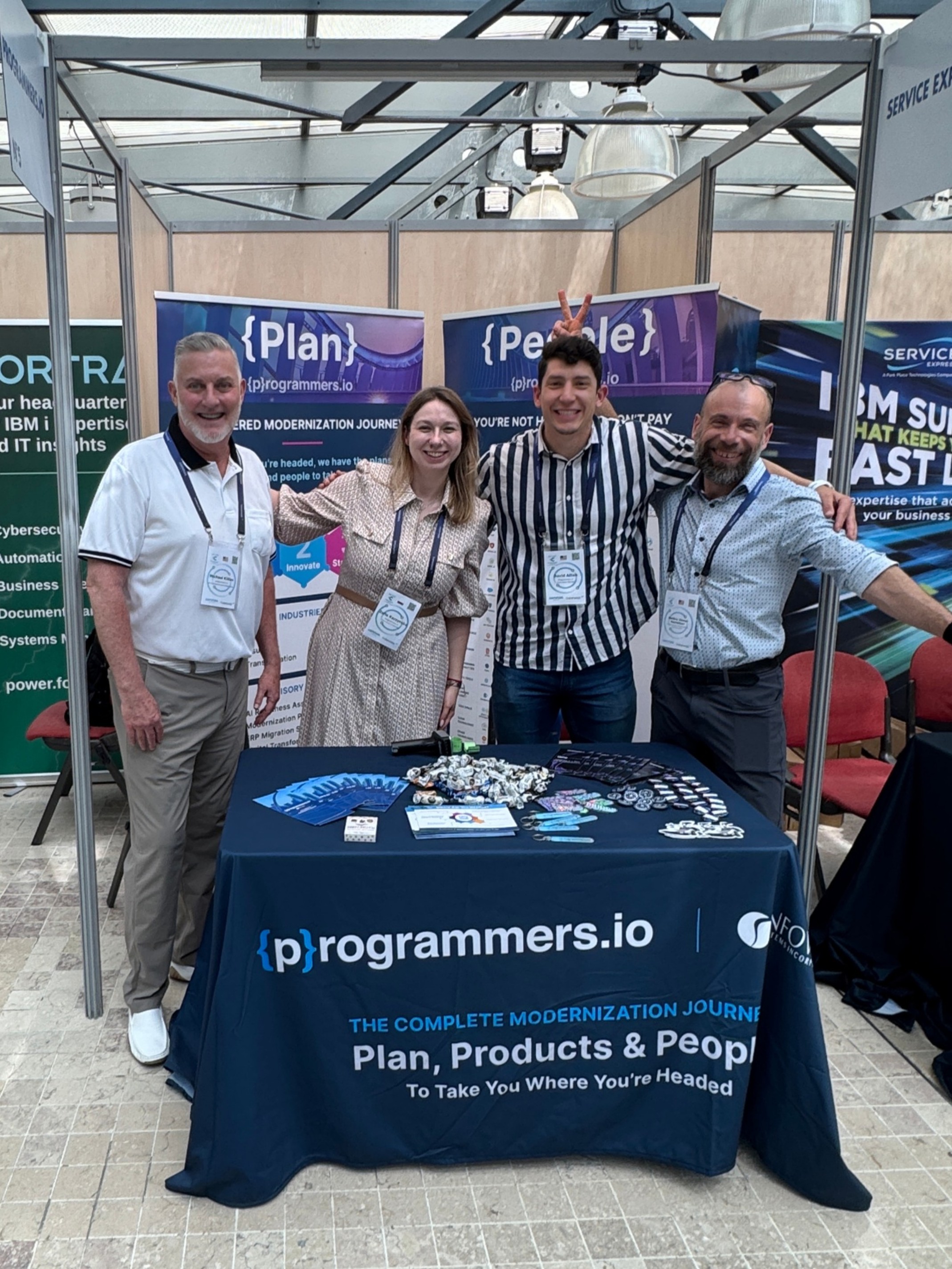
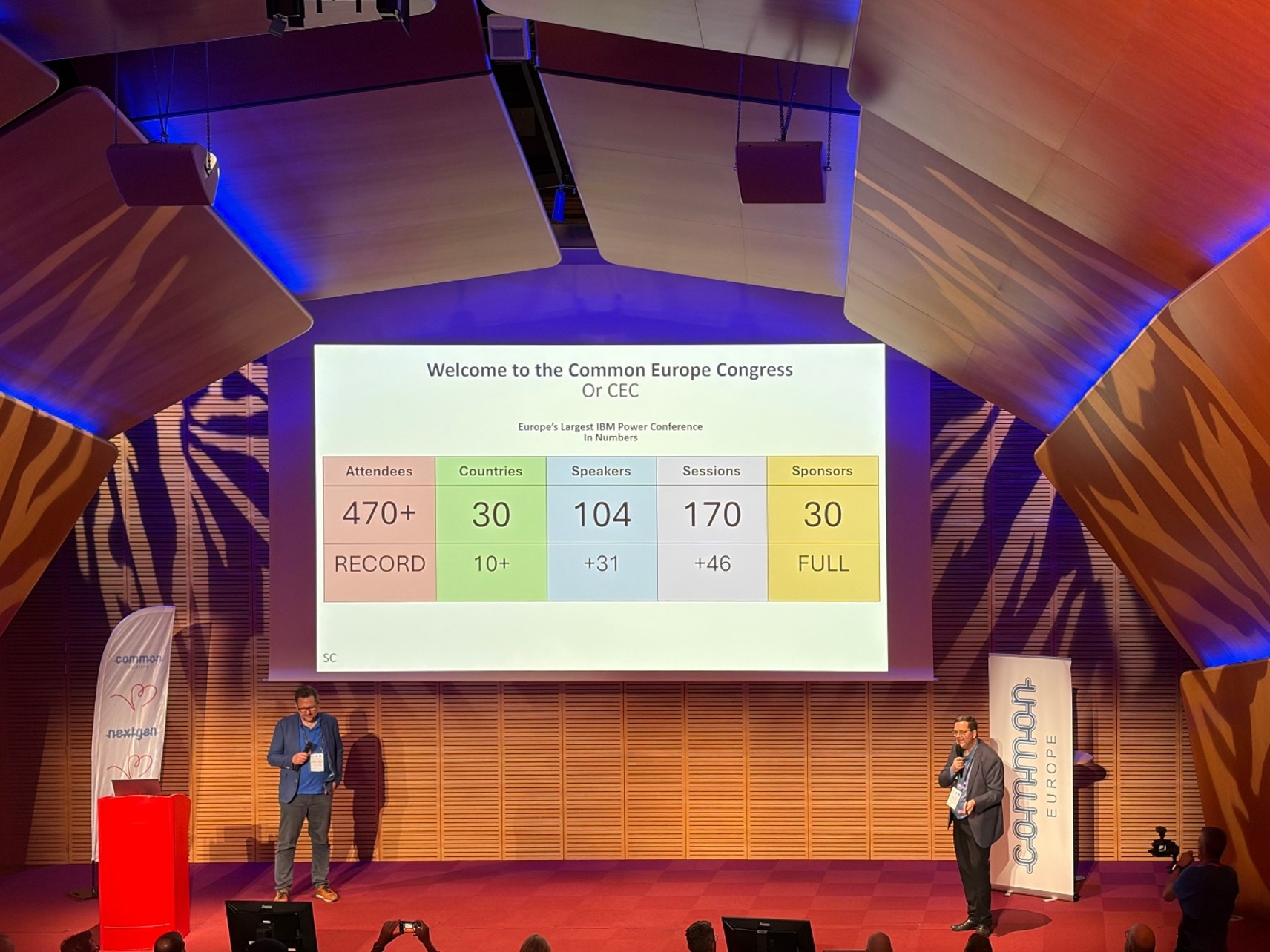
COMMON Europe Congress brings together the people who keep IBM i environments running. This year’s event drew a record 500 participants — including developers, IT leaders, managers, and technology partners from across the continent. But it wasn’t the attendance figures alone that were notable; it was the depth of conversation happening across the floor.
The mood reflected a growing sense across the IBM i world that the decisions organizations make in the next few years will define how well their platforms serve them for the decade ahead. While the technology itself remains remarkably resilient, the environment around it is evolving rapidly.
COMMON Europe Congress 2026 offered a valuable window into those changes. Here are the key takeaways and what they mean for the future of the IBM i ecosystem.
1. Retiring Talent and Vanishing Knowledge
One of the most pressing challenges facing the IBM i community remains a familiar one: people. Across conversations at COMMON Europe Congress 2026, concerns about the loss of institutional knowledge and technical expertise surfaced repeatedly.
As experienced RPG and COBOL developers reach retirement age, organizations are finding that decades of undocumented institutional knowledge — business logic, platform-specific workarounds, years of accumulated system knowledge — are walking out the door with them. And once it’s gone, it’s extraordinarily difficult to reconstruct.
However, the urgency has shifted from whether this is a workforce issue to how much time organizations have left to act. Companies that haven’t begun investing in succession planning, knowledge transfer, and skills development are already operating at a deficit. As the gap widens with every retirement, organizations will need to decide whether they can continue relying on a shrinking pool of experienced IBM i professionals — or take deliberate steps to preserve and extend that expertise.
For organizations wondering where to start, Managing RPG Professional Retirement Risks breaks down the practical steps that can be taken before it’s too late.
2. Unresolved Questions of AI Adoption
Artificial intelligence dominated every corner of the event — from solution demonstrations at booths to keynote discussions and everything in between. As AI promises to address some of the IBM i community’s most pressing challenges, the enthusiasm surrounding this technology was evident.
At the same time, discussions throughout the event highlighted several common considerations organizations are evaluating as they explore AI adoption:
- Security, Governance, and Compliance: Organizations continue to assess how AI initiatives fit within existing governance structures, security requirements, and regulatory obligations.
- Long-Term Investment Requirements: While proof-of-concept projects can demonstrate value quickly, many organizations are also focused on understanding the operational and financial considerations associated with scaling AI initiatives over time.
- Implementation and Operational Guidance: As the AI ecosystem evolves, businesses are looking for practical approaches to implementation, management, and ongoing oversight within IBM i environments.
These will be important areas to watch as AI adoption within the IBM i community continues to mature. Organizations that balance innovation with sound governance and operational discipline will be best positioned to realize sustainable business value from AI.
3. A Shifting Lens on IBM i Modernization
Modernization remained a central topic with organizations at various stages of their journey sharing experiences, experimentations, and expectations. Across those discussions, two recurring patterns stood out consistently:
- Modernization Complexity: Many organizations are navigating increasingly complex modernization environments — spanning multiple tools, vendors, and stakeholders. The challenge is no longer simply choosing the right technology but coordinating efforts across a fragmented landscape while keeping delivery on track and costs under control.
- Push for Outcomes: There is a growing emphasis on ensuring modernization efforts translate into tangible business outcomes rather than purely technical achievements. Organizations are increasingly evaluating initiatives not just on execution quality, but on the measurable impact they deliver to the business.
These dynamics signal a broader change in how IBM i modernization is being approached — from technical execution to organizational impact. As this evolution continues, the organizations that will lead are those that simplify complexity while staying firmly focused on outcomes that matter.
4. Integrations as a Strategic Imperative
Discussions revealed that the ability to surface timely, high-quality data and connect IBM i environments with modern platforms is no longer optional — it is the foundation everything else is built on.
In this era of AI, providing models with timely and reliable information is crucial to deriving meaningful results. IBM i environments sit on decades of mission-critical business data — and that is precisely what makes them so valuable. Yet this data often lives in silos, lacks structure, or cannot be accessed in real time. Without the right integrations in place, it cannot be fully leveraged.
The IBM i organizations that are pulling ahead are those treating data accessibility and real-time integration as a strategic priority rather than a technical afterthought. Connecting IBM i to cloud platforms, real-time data streams, and third-party applications isn’t just about keeping up with technology trends — it’s about unlocking the full potential of an already powerful platform.
5. The Value of Regional Understanding
Across conversations at COMMON Europe 2026, it became evident that regional business understanding, cultural familiarity, and local market awareness are qualities European enterprises hold in high regard.
This expectation goes beyond surface-level familiarity. Cultural context, linguistic fluency, and regional understanding were consistently cited as factors that play a role in how vendor relationships tend to develop and endure over time.
In a community where trust develops gradually and long-term relationships carry considerable weight, a genuine understanding of the European business landscape has been seen as a foundation for lasting client connections.
Parting Thoughts
COMMON Europe 2026 was more than a conference — it was a snapshot of an industry navigating genuine change. The IBM i platform remains as resilient and mission-critical as ever, but the environment around it is shifting in ways that demand attention.
The themes that surfaced at this year’s Congress point to a community that is actively preparing for the next chapter. While the topics varied, the underlying message was consistent — long-term sustainability matters more than short-term trends. Perhaps most importantly, it was clear that the organizations poised to shape the next decade of IBM i are those moving from awareness to action today.
If you’re looking to navigate these shifts and explore what’s next for your IBM i environment, consider scheduling a meeting with our IBM Champions to define your next move.